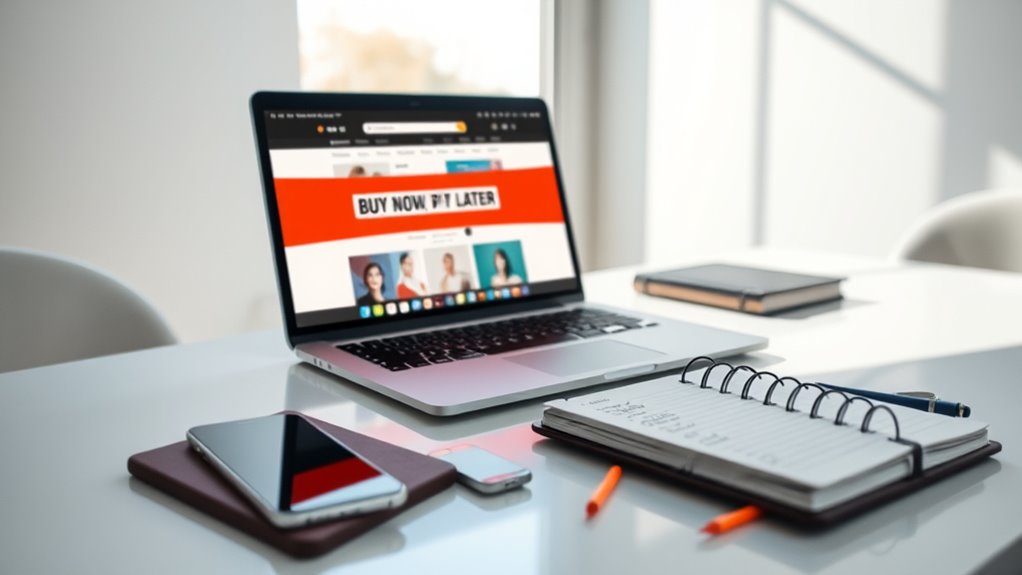

Using “Buy Now, Pay Later” can seem like a smart way to manage your purchases, but it’s easy to overspend if you’re not careful. When you treat these options like a free extension of your budget, you risk falling into debt or paying costly interest. Knowing how to use this service responsibly isn’t just about avoiding fees—it’s about protecting your financial health. So, how can you make it work without falling into traps?
Key Takeaways
- Set a strict budget before using BNPL to avoid impulsive purchases and overspending.
- Track all BNPL installment schedules and due dates to prevent late payments and fees.
- Read all terms carefully, including interest rates and fees, to understand total costs.
- Use BNPL only for necessary purchases you can afford to pay back on time.
- Monitor your overall BNPL usage to prevent debt accumulation and maintain financial health.

Have you ever wondered how you can get what you want today without paying the full amount upfront? Buy Now, Pay Later (BNPL) options make this possible, giving you the convenience of immediate possession while delaying payments. But while it sounds perfect, it’s vital to understand how these plans work and how they can affect your financial health. One key aspect worth considering is interest rates. Many people assume BNPL is interest-free, but that’s not always true. Some providers offer interest-free periods, but if you miss a payment or don’t pay off within the promotional window, high interest rates can kick in, increasing the total amount you owe substantially. This can turn a seemingly affordable purchase into a costly affair if you’re not careful.
Another essential factor is the credit impact. When you opt for BNPL, your provider might perform a soft or hard credit check, which can influence your credit score. A soft inquiry usually doesn’t harm your score, but a hard inquiry might temporarily lower it. If you frequently use BNPL services or make late payments, it could send a negative signal to lenders, making it harder to qualify for traditional credit in the future. Conversely, responsibly managing your BNPL payments can help build a positive credit history, as some providers report your timely payments to credit bureaus. This can be a useful way to demonstrate financial responsibility if used wisely. Additionally, understanding the potential for debt accumulation is crucial, as multiple BNPL purchases can add up quickly and strain your budget.
To avoid overspending, it’s vital to set clear boundaries before you choose BNPL. Treat it like a regular loan—only buy what you genuinely need and can afford to pay back without straining your budget. Keep track of your installment schedules and mark payment due dates on your calendar. Missing payments can not only lead to late fees but also damage your credit profile and accrue high-interest charges, especially if the grace period expires. Before committing to any BNPL plan, read the fine print carefully—know the interest rates, payment schedule, and whether your credit score might be affected.

MAY PAPER CO. A5 Afterpay Buy Now Pay Later Planner Insert for Filofax A5, LV GM agenda refill 6 hole 5.8 x 8.3
Paper Weight: 120 gsm
As an affiliate, we earn on qualifying purchases.
As an affiliate, we earn on qualifying purchases.
Conclusion
Remember, using “Buy Now, Pay Later” wisely is like steering a ship through calm waters, not a storm. Set your limits, treat it like a loan, and stay mindful of your spending. Think of it as your trusted compass, guiding you away from the shoals of debt. With discipline and awareness, you can enjoy the convenience without risking a financial shipwreck, ensuring your journey remains steady and secure—no matter how turbulent the seas.

Bill Tracker Notebook, Monthly Bill Payment Checklist, 6" x 8.5", Bill Organizer with Back Pocket for Personal Budgeting Financial, 128 Pages
Simple Bill and Expense Tracking – The bill payment checklist is designed to help you stay on top…
As an affiliate, we earn on qualifying purchases.
As an affiliate, we earn on qualifying purchases.
interest-free BNPL options
As an affiliate, we earn on qualifying purchases.
As an affiliate, we earn on qualifying purchases.
credit impact monitoring tools
As an affiliate, we earn on qualifying purchases.
As an affiliate, we earn on qualifying purchases.