

The best MacBook deal for most people in this lineup is the 13-inch MacBook Air with M5, 24GB memory, and 1TB SSD: it pairs portable dimensions with room for heavier workloads and files. For a larger screen, the 15-inch M5 MacBook Air with 16GB memory is a practical everyday pick, while the 14-inch MacBook Pro with M5 suits buyers who need a pro-class display and more sustained performance. The main tradeoffs are portability versus screen space, memory and storage headroom versus a simpler setup, and newer capability versus an older refurbished model. Color variants share the same core configuration, so I separate them by practical fit rather than treating finish as a performance difference. Read on for the full comparison and help matching each MacBook to your needs.

Get your next haul delivered free — and shop member deals
- Fast, free delivery on millions of items
- Access to Prime Big Deal Days deals on October 6–7
- Prime Video, Amazon Music and more included
Key Takeaways
- The 13-inch Air with 24GB memory and 1TB storage is the most balanced higher-capacity choice: it adds headroom without the size and performance focus of the Pro models.
- The four 15-inch Airs with 16GB memory and 512GB storage have matching core specifications; choose among them for screen size and finish, not expected speed.
- The 14-inch M5 MacBook Pro offers a more focused upgrade for buyers who value a Pro display and demanding-work support, while the 16-inch M5 Pro model targets heavier professional workloads.
- The MacBook Neo listings are entry-level alternatives with 8GB memory and 256GB storage; those limits make them a better fit for lighter use than long-term multitasking or large local libraries.
- The renewed 2020 M1 Air is the outlier: its 8GB memory and 128GB SSD make it suitable only when basic tasks and tight storage needs outweigh the appeal of newer hardware.





| MacBook deal | Memory | Storage | Display | Camera |
|---|---|---|---|---|
| Apple MacBook Neo 13-inch Lapt | 8GB unified memory | 256GB SSD | 13-inch Liquid Retina | 1080p FaceTime HD |
| Apple MacBook Air 15-inch Lapt | 16GB unified memory | 512GB SSD | 15.3-inch Liquid Retina | 12MP Center Stage |
| Apple MacBook Air 15-inch Lapt | 16GB unified memory | 512GB SSD | 15.3-inch Liquid Retina, supports 1 billion colors | 12MP Center Stage |
| Apple MacBook Air 15-inch Lapt | 16GB unified memory | 512GB SSD | 15.3-inch Liquid Retina | 12MP Center Stage |
| Apple 13.6-inch MacBook Air wi | 16GB unified memory | 512GB SSD | 13.6-inch Liquid Retina | 12MP Center Stage |
| Apple 14.2-inch MacBook Pro wi | 16GB unified memory | 1TB SSD | 14.2-inch Liquid Retina XDR | — |
| Apple MacBook Air 13-inch Lapt | 24GB unified memory | 1TB SSD | 13.6-inch Liquid Retina | 12MP Center Stage |
| Apple MacBook Neo 13-inch Lapt | 8GB unified memory | 256GB SSD | 13-inch Liquid Retina | 1080p FaceTime HD |
| Apple MacBook Pro 16.2-inch wi | 24GB unified memory | 1TB SSD | 16.2-inch Liquid Retina XDR | — |
| Apple MacBook Air 13-inch Lapt | 16GB unified memory | 512GB SSD | 13.6-inch Liquid Retina | 12MP Center Stage |
| Apple MacBook Air 15-inch Lapt | 16GB unified memory | 512GB SSD | 15.3-inch Liquid Retina | 12MP Center Stage |
| Apple MacBook Air 15-inch with | 24GB unified memory | 1TB SSD | 15.3-inch Liquid Retina | 12MP Center Stage |
| Apple MacBook Air 13.3-inch | 8GB | 128GB SSD | 13.3-inch Retina, 2560 × 1600 | 720p FaceTime HD |
| Apple MacBook Air 13-inch Lapt | 24GB unified memory | 1TB SSD | 13.6-inch Liquid Retina | 12MP Center Stage |
| Apple MacBook Air 13-inch Lapt | 16GB unified memory | 512GB SSD | 13.6-inch Liquid Retina | 12MP Center Stage |
More Details on Our Top Picks
Apple MacBook Neo 13-inch Laptop with A18 Pro Chip, 8GB Memory, 256GB SSD, Liquid Retina Display, and 1080p Camera (Blush)
The MacBook Neo is the straightforward pick for everyday tasks when a lighter, less demanding setup matters more than extra headroom. Its 8GB of memory and 256GB SSD suit browsing, writing, video calls, and study, while the 13-inch Liquid Retina display keeps the laptop compact at 2.71 pounds. Compared with the 13.6-inch MacBook Air with M5, the Neo has less memory and storage, so it is a weaker fit for heavy multitasking or large photo libraries. Its listed up to 16-hour battery life is also shorter than the Air’s up-to-18-hour claim. In return, it offers a 1080p camera and an aluminum enclosure for a simple daily-use package. The main compromises are limited storage and less capacity for demanding workflows.
Pros:- Compact 13-inch design weighs 2.71 pounds
- Liquid Retina display supports 1 billion colors
- 1080p FaceTime HD camera with dual microphones
- Listed battery life of up to 16 hours
Cons:- 8GB memory gives less room for demanding multitasking than the MacBook Air models
- 256GB SSD can fill quickly with large apps and files
- Listed battery life is shorter than the M5 MacBook Air models’ up-to-18-hour claim
Best for: Students and everyday users who mainly browse, write, stream, and join video calls, and who can work within 256GB of storage.
Not ideal for: People who routinely run demanding creative apps, keep large local media libraries, or want the 16GB memory and 512GB storage of the MacBook Air models.
- Processor:A18 Pro
- Memory:8GB unified memory
- Storage:256GB SSD
- Display:13-inch Liquid Retina
- Camera:1080p FaceTime HD
- Battery life:Up to 16 hours
- Weight:2.71 pounds
- Color:Blush
Our verdict“Choose the MacBook Neo for portable everyday computing if its 8GB memory and 256GB storage match your workload.”
Apple MacBook Air 15-inch Laptop with M5 Chip, 16GB Memory, 512GB SSD, Midnight
This 15-inch MacBook Air makes the strongest case for a roomy screen without moving up to a MacBook Pro. Its 15.3-inch Liquid Retina display gives documents, split-screen work, and video more space than the 13.6-inch MacBook Air, while the same listed 16GB memory and 512GB SSD provide a practical everyday configuration. At 3.32 pounds, it remains portable, though it takes up more room in a bag than the smaller Air. Compared with the MacBook Neo, the M5 Air offers more memory, twice the listed storage, and a longer claimed battery life of up to 18 hours; that makes it a better match for heavier multitasking. Its tradeoff is connectivity: the listed built-in ports are limited to two Thunderbolt 4 ports, alongside MagSafe and a headphone jack.
Pros:- 15.3-inch display provides more workspace than the 13.6-inch MacBook Air
- 16GB unified memory and 512GB SSD suit general productivity and multitasking
- Listed battery life reaches up to 18 hours
- 12MP Center Stage camera and six-speaker audio system
Cons:- At 3.32 pounds, it is heavier and larger than the 13.6-inch MacBook Air
- Only two Thunderbolt 4 ports are listed, so accessory-heavy setups may need a hub
- The listed memory and storage configuration may not suit buyers needing more capacity
Best for: Mobile professionals and students who want a large workspace for multitasking but still need a laptop they can carry regularly.
Not ideal for: Commuters prioritizing the smallest, lightest laptop, or users who need multiple built-in ports without adapters.
- Processor:Apple M5
- Display:15.3-inch Liquid Retina
- Memory:16GB unified memory
- Storage:512GB SSD
- Camera:12MP Center Stage
- Wireless:Wi-Fi 7, Bluetooth 6
- Ports:Two Thunderbolt 4, MagSafe charging, headphone jack
- Battery life:Up to 18 hours
- Weight:3.32 pounds
Our verdict“Pick this 15-inch Air if screen space is your priority and you are comfortable carrying a larger laptop with limited built-in ports.”
Apple MacBook Air 15-inch Laptop with M5 Chip, 16GB Memory, 512GB SSD, Starlight
The Starlight version offers the same useful large-screen formula as the Midnight 15-inch MacBook Air: an M5 chip, 16GB unified memory, and 512GB SSD in a thin 15.3-inch laptop. Its color-accurate Liquid Retina display, listed as supporting 1 billion colors, gives visual work and media more room than the 13.6-inch MacBook Air. The 12MP Center Stage camera and support for up to two external displays also suit video calls and a desk-based setup. Against the Midnight version, the supplied specifications show no performance or capacity advantage, so the choice is primarily about finish and configuration details rather than capability. Like its sibling, it weighs 3.32 pounds and lists only two Thunderbolt 4 ports, which can mean carrying a hub for several wired accessories.
Pros:- 15.3-inch Liquid Retina display supports 1 billion colors
- 16GB unified memory and 512GB SSD for everyday multitasking
- Supports up to two external displays
- 12MP Center Stage camera and listed battery life of up to 18 hours
Cons:- Same core configuration as the Midnight 15-inch Air, with color as the main listed distinction
- Two Thunderbolt 4 ports may be restrictive for accessory-heavy setups
- The 3.32-pound weight is less convenient than the 13.6-inch MacBook Air for frequent travel
Best for: Buyers who want a large-screen MacBook Air for desk work, external displays, video calls, and everyday productivity, and prefer the Starlight finish.
Not ideal for: People who need a compact commute-friendly laptop or more built-in ports and storage than this listed configuration provides.
- Processor:Apple M5
- Display:15.3-inch Liquid Retina, supports 1 billion colors
- Memory:16GB unified memory
- Storage:512GB SSD
- Camera:12MP Center Stage
- Wireless:Wi-Fi 7, Bluetooth 6
- External displays:Supports up to two
- Battery life:Up to 18 hours
- Color:Starlight
Our verdict“Choose the Starlight 15-inch Air if you want a roomy display and external-display support in this color, rather than a smaller or more connected laptop.”
Apple MacBook Air 15-inch Laptop with M5 Chip, 16GB Memory, 512GB SSD, Silver
The Silver 15-inch MacBook Air earns a place for buyers who want the large-display Air formula in a familiar, understated finish. Its 15.3-inch Liquid Retina screen is the key advantage over the 13.6-inch MacBook Air: it leaves more room for side-by-side windows, while the 16GB memory and 512GB SSD match the listed configurations of the Midnight and Starlight 15-inch models. With up to 18 hours of battery life and support for up to two external displays, it can serve as both a portable work laptop and a desk setup. The Silver color does not change the performance or capacity, so there is no functional edge over its 15-inch siblings. It also shares their 3.32-pound weight and two-port Thunderbolt 4 limitation.
Pros:- 15.3-inch Liquid Retina display offers a spacious work area
- 16GB memory and 512GB SSD provide the same listed core configuration as other 15-inch Air colors
- Listed battery life of up to 18 hours
- Supports up to two external displays
Cons:- No listed performance or storage difference from the Midnight and Starlight 15-inch Air models
- Two Thunderbolt 4 ports may require a hub for several wired devices
- Larger and heavier than the 13.6-inch MacBook Air
Best for: Users who want a large-screen MacBook Air for office work or study and prefer a conventional Silver finish.
Not ideal for: Buyers seeking the lightest MacBook in this group, more than 512GB of listed storage, or a broader selection of built-in ports.
- Processor:Apple M5
- Display:15.3-inch Liquid Retina
- Memory:16GB unified memory
- Storage:512GB SSD
- Camera:12MP Center Stage
- Wireless:Wi-Fi 7, Bluetooth 6
- Ports:Two Thunderbolt 4, MagSafe charging, headphone jack
- Battery life:Up to 18 hours
- Weight:3.32 pounds
Our verdict“The Silver 15-inch Air suits buyers who value a spacious display and a classic finish more than portability or extra connectivity.”
Apple 13.6-inch MacBook Air with M5 chip, 16GB memory, 512GB SSD (Midnight)
This 13.6-inch MacBook Air is the portable middle ground between the entry-level MacBook Neo and the larger 15-inch Air models. It keeps the M5 chip, 16GB memory, and 512GB SSD configuration of the listed 15-inch Airs while weighing just 2.71 pounds, making it easier to carry every day. The 12MP Center Stage camera and up-to-18-hour battery claim also make it a capable option for work away from a desk. Compared with the Neo, it offers twice the listed memory and storage and a longer stated battery life; compared with the 15-inch Air, the tradeoff is a smaller screen for split-screen work and media. Its two Thunderbolt 4 ports may also call for an adapter when several wired accessories are involved.
Pros:- 2.71-pound weight suits regular travel and commuting
- 16GB unified memory and 512GB SSD exceed the MacBook Neo’s listed capacity
- Listed battery life of up to 18 hours
- 12MP Center Stage camera and support for up to two external displays
Cons:- 13.6-inch display provides less workspace than the 15-inch MacBook Air models
- Two Thunderbolt 4 ports may limit direct accessory connections
- The listed 512GB SSD may not suit buyers with large local media or project libraries
Best for: Frequent travelers, students, and hybrid workers who want an easy-to-carry laptop with more memory and storage than the MacBook Neo.
Not ideal for: People who regularly work with several windows side by side or want the larger 15.3-inch MacBook Air display.
- Processor:Apple M5
- Display:13.6-inch Liquid Retina
- Memory:16GB unified memory
- Storage:512GB SSD
- Camera:12MP Center Stage
- Wireless:Wi-Fi 7, Bluetooth 6
- Ports:Two Thunderbolt 4, MagSafe charging, headphone jack
- Battery life:Up to 18 hours
- Weight:2.71 pounds
Our verdict“Choose this 13.6-inch Air if portability matters more than the 15-inch models’ larger workspace and you want more listed capacity than the Neo.”
Apple 14.2-inch MacBook Pro with M5, 10-core CPU, 10-core GPU, 16GB Memory, and 1TB SSD (Space Black)
The 14.2-inch MacBook Pro suits buyers who want a professional display and useful built-in connections in a more manageable size than the 16.2-inch MacBook Pro with M5 Pro. Its M5 chip, 16GB memory, and 1TB SSD make it a capable choice for creative projects and demanding everyday work, while the Liquid Retina XDR screen gives HDR material room to shine. HDMI and an SDXC slot can simplify desk and camera workflows without relying on adapters. The tradeoff is that it lacks the larger model’s M5 Pro chip and 24GB memory, so buyers with especially heavy workloads may prefer that configuration. At 3.41 pounds, it is also heavier than either 13-inch MacBook Air here. This is the more connected, display-focused pick for buyers who still value a smaller Pro chassis.
Pros:- Liquid Retina XDR display reaches up to 1600 nits peak brightness
- 1TB SSD provides room for large project files
- HDMI, SDXC, MagSafe 3, and three Thunderbolt 4 ports reduce adapter needs
- Supports up to two external displays
Cons:- Heavier than the 13-inch MacBook Air models in this batch
- 16GB memory is less headroom than the 24GB 16-inch M5 Pro configuration
- Smaller display area than the 16.2-inch MacBook Pro
Best for: Creative professionals and frequent desk-to-meeting commuters who need a high-quality display, 1TB of storage, and built-in HDMI and SDXC.
Not ideal for: Frequent travelers prioritizing the lightest laptop, or professionals whose workloads call for the 16-inch M5 Pro model’s 24GB memory.
- Chip:Apple M5
- CPU and GPU:10-core CPU, 10-core GPU
- Memory:16GB unified memory
- Storage:1TB SSD
- Display:14.2-inch Liquid Retina XDR
- Ports:Three Thunderbolt 4, MagSafe 3, SDXC card slot, HDMI, headphone jack
- External displays:Up to two
- Weight:3.41 pounds
Our verdict“Choose this MacBook Pro if you want a bright XDR screen and broad built-in connectivity in a smaller pro-level laptop.”
Apple MacBook Air 13-inch Laptop with M5 Chip, 24GB Memory, 1TB SSD, Sky Blue
This 13-inch MacBook Air pairs an easy-to-carry design with 24GB of memory and a 1TB SSD, giving it more room for many open apps and local files than the 16GB, 512GB Air configuration. The extra memory and storage make this the stronger Air choice for buyers who want to keep a laptop for varied workloads without moving to a Pro. Its 2.71-pound weight and up-to-18-hour battery life suit working across campus, offices, or home. Compared with the 14.2-inch MacBook Pro, it gives up the XDR display and built-in HDMI and SDXC, and its two Thunderbolt 4 ports leave fewer connection options. I’d pick it for portability and capacity; buyers focused on HDR work or direct camera-card access should look at the Pro.
Pros:- 24GB unified memory gives more multitasking headroom than the 16GB Air configuration
- 1TB SSD offers substantial local storage
- Light 2.71-pound design
- Up to 18 hours of battery life
Cons:- Two Thunderbolt 4 ports provide fewer connections than the MacBook Pro
- Liquid Retina display lacks the Pro’s XDR and HDR brightness features
Best for: Students, consultants, and mobile professionals who keep many apps open and need ample local storage in a light laptop.
Not ideal for: Video editors who need an XDR screen and built-in SDXC, or users who regularly connect several peripherals directly.
- Chip:Apple M5
- Display:13.6-inch Liquid Retina
- Memory:24GB unified memory
- Storage:1TB SSD
- Battery life:Up to 18 hours
- Camera:12MP Center Stage
- Ports:Two Thunderbolt 4, MagSafe charging port, headphone jack
- Weight:2.71 pounds
Our verdict“Choose this Air for a light everyday laptop with more memory and storage than the standard 16GB, 512GB Air.”
Apple MacBook Neo 13-inch Laptop with A18 Pro Chip, 8GB Memory, 256GB SSD, and Liquid Retina Display (Indigo)
The MacBook Neo is the most pared-back option in this group, with an A18 Pro chip, 8GB of memory, and 256GB SSD for buyers whose routine is web browsing, documents, video calls, and streaming. Its 2.71-pound aluminum design is as light as the 13-inch MacBook Air configurations listed here, and the 13-inch Liquid Retina display supports a billion colors. Compared with the M5 MacBook Air, though, the Neo has less memory and storage, a 1080p camera instead of a 12MP Center Stage camera, and no listed Thunderbolt or MagSafe details. That narrower spec set makes it a less flexible choice for heavier multitasking or large media libraries. I’d reserve this pick for straightforward personal or school use where portability matters more than workload headroom.
Pros:- Portable aluminum design weighs 2.71 pounds
- 13-inch Liquid Retina display supports 1 billion colors
- 1080p FaceTime HD camera with dual microphones and stereo speakers
- Up to 16 hours of battery life
Cons:- 8GB unified memory offers less headroom than the 16GB and 24GB M5 Air configurations
- 256GB SSD is limited for large files and media libraries
- Provided specs do not list Thunderbolt or MagSafe ports
Best for: First-time Mac buyers and students who mainly use browser tabs, documents, video calls, and streaming.
Not ideal for: People who edit large media projects, keep many demanding apps open, or need the 1TB storage available in the M5 Air.
- Chip:A18 Pro
- Display:13-inch Liquid Retina
- Memory:8GB unified memory
- Storage:256GB SSD
- Camera:1080p FaceTime HD
- Battery life:Up to 16 hours
- Dimensions:8.12 x 11.71 x 0.5 inches
- Weight:2.71 pounds
Our verdict“Choose the Neo for everyday basics and video calls if you can work comfortably within 8GB of memory and 256GB of storage.”
Apple MacBook Pro 16.2-inch with M5 Pro, 18-core CPU, 20-core GPU, 24GB Memory, 1TB SSD, Wi-Fi 7, Space Black
For buyers who need a large work surface and stronger listed processing hardware, this 16.2-inch MacBook Pro stands apart from the 14.2-inch M5 Pro model in the batch with its M5 Pro, 18-core CPU, 20-core GPU, and 24GB memory. The bigger Liquid Retina XDR display is better suited to arranging detailed timelines, large canvases, and multiple windows, while Thunderbolt 5, HDMI, and SDXC support a varied workstation setup. Its six-speaker audio system also adds a richer built-in listening option than the MacBook Air models provide. The cost of that capability is portability: at 4.71 pounds, it is far heavier than the 2.71-pound Airs. I’d choose it for sustained creative or professional workloads, not as the easy daily carry.
Pros:- M5 Pro with 18-core CPU and 20-core GPU is the strongest listed chip configuration in this batch
- Large 16.2-inch Liquid Retina XDR display
- Three Thunderbolt 5 ports plus HDMI and SDXC
- 24GB unified memory and 1TB SSD
Cons:- At 4.71 pounds, it is considerably heavier than the MacBook Air models
- Large chassis is less convenient for small bags and cramped workspaces
Best for: Video editors, developers, and creative professionals who want a large XDR workspace, substantial memory, and high-end connectivity.
Not ideal for: Students and frequent travelers who favor a light carry, or everyday users who do not need the M5 Pro configuration.
- Processor:Apple M5 Pro with 18-core CPU
- Graphics:20-core GPU
- Display:16.2-inch Liquid Retina XDR
- Memory:24GB unified memory
- Storage:1TB SSD
- Wireless:Wi-Fi 7, Bluetooth 6
- Ports:Three Thunderbolt 5, MagSafe 3, SDXC, HDMI, headphone jack
- Weight:4.71 pounds
Our verdict“Choose this 16-inch Pro for demanding work that benefits from its M5 Pro hardware and spacious XDR display, provided its weight suits your routine.”
Apple MacBook Air 13-inch Laptop with M5 Chip, 16GB Memory, 512GB SSD, Starlight
This 13-inch MacBook Air is the straightforward all-rounder in the batch: its M5 chip, 16GB memory, and 512GB SSD cover common work and study needs without the extra capacity of the 24GB, 1TB Air. The smaller configuration makes more sense for buyers who keep most files in cloud storage and do not routinely run memory-heavy creative tools. It shares the Air’s up-to-18-hour battery life, 12MP Center Stage camera, and support for two external displays, giving it a useful mix of mobility and desk flexibility. Compared with the 14.2-inch MacBook Pro, it is the lighter, simpler everyday option, but it gives up XDR brightness and built-in HDMI and SDXC. The listed specs do not include weight, so I’d verify that detail if carry weight is a deciding factor.
Pros:- M5 chip paired with 16GB unified memory
- 512GB SSD suits everyday files and apps
- Up to 18 hours of battery life
- 12MP Center Stage camera and support for up to two external displays
Cons:- Less memory and storage than the 24GB, 1TB MacBook Air configuration
- Two Thunderbolt 4 ports offer fewer built-in connections than the MacBook Pro
- Supplied specifications do not state the laptop’s weight
Best for: Students and office workers who want an M5 Mac for documents, video calls, browsing, and moderate multitasking.
Not ideal for: Users who need 1TB of internal storage, 24GB memory, or a built-in SDXC slot for frequent media transfers.
- Chip:Apple M5
- Display:13.6-inch Liquid Retina
- Memory:16GB unified memory
- Storage:512GB SSD
- Battery life:Up to 18 hours
- Camera:12MP Center Stage
- Ports:Two Thunderbolt 4, MagSafe charging port, headphone jack
- External displays:Up to two
Our verdict“Choose this Air for everyday M5 performance and a balanced memory and storage configuration without stepping up to the 24GB, 1TB model.”
Apple MacBook Air 15-inch Laptop with M5 Chip, 16GB Memory, 512GB SSD, Sky Blue
I’d choose this 15-inch Air when a generous workspace matters more than getting the smallest MacBook. Its 15.3-inch Liquid Retina display gives documents, spreadsheets, and side-by-side windows more room than the 13-inch M5 Air models, while the 3.32-pound body remains portable for a laptop this size. The M5 chip, 16GB memory, and 512GB SSD make a balanced everyday configuration; the 24GB/1TB 15-inch version is a better fit for heavier multitasking and larger local libraries, but this one avoids paying for capacity you may not need. Up to 18 hours of stated battery life and support for two external displays add flexibility. The tradeoff is a larger carry footprint and just two Thunderbolt 4 ports; buyers needing more headroom should compare the higher-memory model.
Pros:- 15.3-inch display offers more working room than the 13-inch Air models.
- M5 chip with 16GB memory and 512GB SSD suits a broad range of everyday tasks.
- Up to 18 hours of stated battery life supports long stretches away from an outlet.
- Supports up to two external displays.
Cons:- Larger chassis is less convenient to carry than the 2.71-pound 13-inch M5 Air.
- Two Thunderbolt 4 ports may require a hub for several wired accessories.
- The listed memory and storage configuration offers less headroom than the 24GB/1TB 15-inch version.
Best for: Students and mobile professionals who want a roomy display for multitasking, video calls, and everyday work without moving to a MacBook Pro.
Not ideal for: Frequent travelers who prioritize the smallest, lightest laptop, or creative users who need 24GB memory and 1TB storage for large projects.
- Display:15.3-inch Liquid Retina
- Processor:Apple M5 chip
- Memory:16GB unified memory
- Storage:512GB SSD
- Camera:12MP Center Stage
- Wireless:Wi-Fi 7, Bluetooth 6
- Ports:Two Thunderbolt 4, MagSafe charging port, headphone jack
- Battery life:Up to 18 hours
- Weight:3.32 pounds
Our verdict“Choose this model for a bigger everyday MacBook screen and balanced M5 specifications, unless portability or extra memory and storage matter more.”
Apple MacBook Air 15-inch with M5 chip, 24GB memory, 1TB SSD, and Liquid Retina display
This configuration is the 15-inch Air to pick when capacity is a priority: 24GB of unified memory and a 1TB SSD give demanding multitaskers and people with larger project libraries more room than the 16GB/512GB version. It keeps the same 15.3-inch Liquid Retina screen, 3.32-pound weight, and up to 18 hours of stated battery life, so the upgrade is about working headroom rather than a different size or mobility class. Compared with the 13-inch M5 Air with the same memory and storage, this model offers more screen space but takes up more room in a bag. The compromises remain typical of the Air: two Thunderbolt 4 ports and no stated user-upgrade path for memory or storage. I’d skip the extra capacity if your work is mostly browsing and documents.
Pros:- 24GB unified memory provides more multitasking headroom than the 16GB 15-inch configuration.
- 1TB SSD accommodates larger local file and project collections.
- 15.3-inch Liquid Retina display provides a spacious workspace.
- Up to 18 hours of stated battery life in a 3.32-pound design.
Cons:- The larger display comes with a bigger carry footprint than the 13-inch M5 Air.
- Two Thunderbolt 4 ports can limit direct connections to wired peripherals.
- Memory and storage are not described as user-upgradeable.
Best for: People who keep many apps open, work with sizable files, or want a large-screen laptop with more memory and storage for longer-term use.
Not ideal for: Basic-use buyers who mainly browse, write, and stream, or commuters who would rather have the smaller 13-inch M5 Air.
- Display:15.3-inch Liquid Retina
- Processor:Apple M5 chip
- Memory:24GB unified memory
- Storage:1TB SSD
- Camera:12MP Center Stage
- Wireless:Wi-Fi 7, Bluetooth 6
- Ports:Two Thunderbolt 4, MagSafe charging port, headphone jack
- Battery life:Up to 18 hours
- Weight:3.32 pounds
Our verdict“Pick this 15-inch Air if you need its combination of screen space, 24GB memory, and 1TB storage; otherwise, the 16GB/512GB model is the more restrained configuration.”
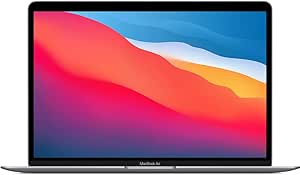
Apple MacBook Air 13.3-inch (2020) with M1 Chip, 8GB RAM, 128GB SSD, Space Gray (Renewed)
This renewed 2020 Air earns a place for buyers who want a familiar, compact MacBook for light tasks and can accept older hardware. Its M1 chip, 8GB memory, and 128GB SSD are a much leaner setup than the M5 Air configurations here, so I’d reserve it for web use, writing, video calls, and basic coursework rather than large creative projects or a long list of open apps. At 2.8 pounds, it is close in weight to the newer 13-inch M5 Air, but its 13.3-inch Retina display, 720p camera, Wi-Fi 6, and older generation make it less current. The stated battery life reaches up to 18 hours, though renewed condition may vary and the included warranty is limited to 90 days. The 128GB drive is the clearest constraint.
Pros:- Compact 13.3-inch Retina display with 2560 × 1600 resolution.
- M1 chip is suited to everyday tasks such as browsing and writing.
- Backlit Magic Keyboard and Touch ID support comfortable typing and quick sign-in.
- Weighs 2.8 pounds and has up to 18 hours of stated battery life.
Cons:- 128GB SSD can fill quickly with apps, photos, and downloaded files.
- 8GB memory and the older M1 platform offer less headroom than the M5 Air models.
- Renewed condition may vary, and the listed warranty is limited to 90 days.
Best for: Budget-conscious students or casual users who need a compact MacBook for writing, browsing, and streaming and can work within 128GB of storage.
Not ideal for: People who need a current-generation chip, frequent video-call use, substantial local storage, or a longer warranty than the listed 90 days.
- Model year:2020
- Display:13.3-inch Retina, 2560 × 1600
- Processor:Apple M1, 8 cores
- Memory:8GB
- Storage:128GB SSD
- Camera:720p FaceTime HD
- Wireless:Wi-Fi 6, Bluetooth 5.0
- Weight:2.8 pounds
- Warranty:90-day limited warranty
Our verdict“Choose this renewed M1 Air only if its compact, basic-use setup fits your needs and the limited storage and warranty are acceptable.”
Apple MacBook Air 13-inch Laptop with M5 Chip, 24GB Memory, 1TB SSD, Liquid Retina Display, 12MP Center Stage Camera, Wi-Fi 7, Touch ID (Midnight)
This 13-inch Air combines a small footprint with the higher-capacity setup that is absent from the standard 16GB/512GB model. The 24GB memory and 1TB SSD provide more room for demanding multitasking and larger files, while the M5 chip keeps the configuration in the current Air lineup. At 2.71 pounds, it is easier to carry than either 15-inch option, though its 13.6-inch display gives up the extra workspace those models provide. Up to 18 hours of stated battery life, Wi-Fi 7, and a 12MP Center Stage camera round out a capable travel setup. The main limitation is connectivity: there are only two Thunderbolt 4 ports, plus MagSafe and a headphone jack. Compared with the 13-inch 16GB/512GB Air, this is the pick for buyers who will use the additional capacity.
Pros:- 24GB unified memory offers more multitasking capacity than the 16GB 13-inch Air.
- 1TB SSD provides room for larger local libraries and work files.
- 2.71-pound design is more portable than the 15-inch Air models.
- 12MP Center Stage camera and Wi-Fi 7 support a modern mobile setup.
Cons:- 13.6-inch display is less spacious than the 15.3-inch Air screens.
- Two Thunderbolt 4 ports may be restrictive for users with several wired accessories.
- No dedicated graphics memory specification is provided.
Best for: Mobile professionals and creative users who want a lightweight 13-inch laptop but need more memory and local storage for multitasking and larger files.
Not ideal for: People who need a large built-in workspace, several wired connections at once, or only use their MacBook for basic tasks that do not call for 24GB memory and 1TB storage.
- Display:13.6-inch Liquid Retina
- Processor:Apple M5 chip
- Memory:24GB unified memory
- Storage:1TB SSD
- Camera:12MP Center Stage
- Wireless:Wi-Fi 7, Bluetooth 6
- Ports:Two Thunderbolt 4, MagSafe charging port, headphone jack
- Battery life:Up to 18 hours
- Weight:2.71 pounds
Our verdict“Choose this 13-inch Air if portability matters but you still need 24GB memory and 1TB storage; opt for a 15-inch Air if screen space comes first.”
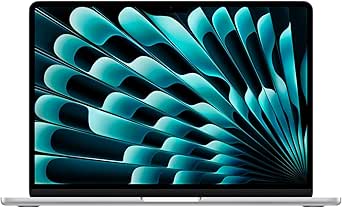
Apple MacBook Air 13-inch Laptop with M5 Chip, 16GB Memory, 512GB SSD, 12MP Center Stage Camera, Touch ID, Wi-Fi 7, Silver
For a straightforward current-generation MacBook, this 13-inch Air pairs the M5 chip with 16GB memory and a 512GB SSD in a 2.71-pound body. That makes it a sensible middle ground: it is more portable than the 15-inch 16GB/512GB Air, while offering a newer platform and more memory and storage than the renewed M1 model. The 13.6-inch Liquid Retina display keeps the laptop compact, and the 12MP Center Stage camera, Wi-Fi 7, and up to 18 hours of stated battery life suit work on the move. Buyers who regularly handle large projects can step up to the 13-inch 24GB/1TB version, but many everyday users will not need that extra capacity. Its main compromise is a familiar one: just two Thunderbolt 4 ports.
Pros:- M5 chip, 16GB memory, and 512GB SSD make a balanced everyday configuration.
- 2.71-pound body is easier to carry than the 15-inch Air.
- 12MP Center Stage camera and Wi-Fi 7 suit video calls and wireless work.
- Up to 18 hours of stated battery life.
Cons:- 13.6-inch screen provides less workspace than either 15-inch Air.
- Two Thunderbolt 4 ports may call for an adapter or hub with multiple wired devices.
- The 16GB/512GB configuration has less capacity than the 24GB/1TB 13-inch model.
Best for: Students, commuters, and general-use buyers who want a lightweight current-generation MacBook for documents, browsing, video calls, and moderate multitasking.
Not ideal for: Users who need a larger screen for side-by-side work or who routinely handle large files and would benefit from 24GB memory and 1TB storage.
- Display:13.6-inch Liquid Retina
- Processor:Apple M5 chip
- Memory:16GB unified memory
- Storage:512GB SSD
- Camera:12MP Center Stage
- Wireless:Wi-Fi 7, Bluetooth 6
- Ports:Two Thunderbolt 4, MagSafe charging port, headphone jack
- Battery life:Up to 18 hours
- Weight:2.71 pounds
Our verdict“Pick this 13-inch Air for a portable, balanced M5 MacBook, and choose the 24GB/1TB version if your workload or file collection needs more headroom.”

How We Picked
I ranked these 15 listings by how well their hardware and form factor fit common MacBook buying needs, not by color or an assumed sale amount. I compared chip tier, memory, storage, screen size, and the stated features that shape daily use, including camera and wireless specifications where listed. Practical headroom and versatility raised a model’s position; limited memory or storage narrowed its appeal.
The order separates everyday Airs from entry-level Neo options and performance-focused Pro models. Near-identical configurations in different finishes remain close together because their core capabilities match. I placed stronger all-round configurations ahead of more specialized or constrained choices, while noting when a premium configuration only makes sense for a particular workload. Deal value here means fit for the buyer’s needs, not an unverified claim about current pricing.
| MacBook deal | Processor | Battery life | Wireless | Ports |
|---|---|---|---|---|
| Apple MacBook Neo 13-inch Lapt | A18 Pro | Up to 16 hours | — | — |
| Apple MacBook Air 15-inch Lapt | Apple M5 | Up to 18 hours | Wi-Fi 7, Bluetooth 6 | Two Thunderbolt 4, MagSafe charging, headphone jack |
| Apple MacBook Air 15-inch Lapt | Apple M5 | Up to 18 hours | Wi-Fi 7, Bluetooth 6 | — |
| Apple MacBook Air 15-inch Lapt | Apple M5 | Up to 18 hours | Wi-Fi 7, Bluetooth 6 | Two Thunderbolt 4, MagSafe charging, headphone jack |
| Apple 13.6-inch MacBook Air wi | Apple M5 | Up to 18 hours | Wi-Fi 7, Bluetooth 6 | Two Thunderbolt 4, MagSafe charging, headphone jack |
| Apple 14.2-inch MacBook Pro wi | — | — | — | Three Thunderbolt 4, MagSafe 3, SDXC card slot, HDMI, headphone jack |
| Apple MacBook Air 13-inch Lapt | — | Up to 18 hours | — | Two Thunderbolt 4, MagSafe charging port, headphone jack |
| Apple MacBook Neo 13-inch Lapt | — | Up to 16 hours | — | — |
| Apple MacBook Pro 16.2-inch wi | Apple M5 Pro with 18-core CPU | — | Wi-Fi 7, Bluetooth 6 | Three Thunderbolt 5, MagSafe 3, SDXC, HDMI, headphone jack |
| Apple MacBook Air 13-inch Lapt | — | Up to 18 hours | — | Two Thunderbolt 4, MagSafe charging port, headphone jack |
| Apple MacBook Air 15-inch Lapt | Apple M5 chip | Up to 18 hours | Wi-Fi 7, Bluetooth 6 | Two Thunderbolt 4, MagSafe charging port, headphone jack |
| Apple MacBook Air 15-inch with | Apple M5 chip | Up to 18 hours | Wi-Fi 7, Bluetooth 6 | Two Thunderbolt 4, MagSafe charging port, headphone jack |
| Apple MacBook Air 13.3-inch | Apple M1, 8 cores | — | Wi-Fi 6, Bluetooth 5.0 | — |
| Apple MacBook Air 13-inch Lapt | Apple M5 chip | Up to 18 hours | Wi-Fi 7, Bluetooth 6 | Two Thunderbolt 4, MagSafe charging port, headphone jack |
| Apple MacBook Air 13-inch Lapt | Apple M5 chip | Up to 18 hours | Wi-Fi 7, Bluetooth 6 | Two Thunderbolt 4, MagSafe charging port, headphone jack |
Factors to Consider When Choosing Best MacBook Deals
A good MacBook deal is not simply the listing with the most specifications. I’d match the machine to the work it must handle, then check that the configuration leaves enough room for the way you save files and use apps. These broader checks can help prevent paying for unused capacity—or choosing a configuration that feels cramped too soon.
Choose Memory for Your Workload, Not a Headline Number
Memory affects how comfortably a laptop keeps multiple apps, browser tabs, and larger projects active at once. For writing, browsing, and common school tasks, a modest configuration may be enough; photo, video, development, and heavier multitasking can benefit from more headroom. A frequent mistake is comparing memory without asking how long the laptop should remain useful. If your workload is likely to grow, the 24GB Air configurations offer a different kind of value than the 16GB everyday models. The Neo and renewed M1 options are more constrained at 8GB, so I’d reserve them for lighter routines. Choose based on your busiest typical day rather than an occasional task you could handle another way.
Estimate Storage Before Settling on a Configuration
Storage needs tend to rise as photo libraries, downloaded media, and project files accumulate. A 256GB or 128GB drive can work if you rely on cloud storage or external drives, but those habits add steps and can make offline work less convenient. The 512GB models provide a middle ground for people who keep a mix of apps and files locally. A 1TB configuration is more appealing for large media collections or projects that need to stay on the laptop. Don’t pay for capacity you will leave empty, but don’t treat external storage as effortless if you travel or work away from a desk. Check your current device’s used storage for a better estimate than guessing from the advertised drive size.
Decide Whether Screen Area Is Worth the Added Bulk
A larger display can make split-screen work, spreadsheets, and long documents easier to manage without an external monitor. The 15-inch Air options provide that room while retaining the Air family’s everyday focus. A 13-inch model is easier to carry and makes more sense for commuters, students moving between classes, or anyone using a separate display at a desk. The 14-inch Pro occupies a different niche: buyers may prefer its Pro-oriented package over simply choosing the biggest Air. Screen size is only part of portability; include the charger, bag, and how often you work on cramped surfaces in your decision. Picking a larger laptop for a desk-bound routine can be sensible, but it adds little if you rarely use the extra area.
Pay for Pro Capability Only When Your Tasks Benefit
Pro models are designed for people whose demanding work makes their added capability meaningful, not for everyone who wants a fast laptop. Video production, complex creative projects, and sustained professional workloads are stronger reasons to compare the 14-inch M5 Pro and 16-inch M5 Pro than ordinary browsing or documents. The 16-inch Pro also makes the most sense when its larger workspace and higher-tier configuration fit a real routine. For everyday use, an Air may leave more budget for storage, accessories, or a display while remaining easier to carry. Ask whether your current apps regularly push your existing computer, or whether the upgrade is mostly appealing on paper. If that pressure is rare, an Air with more memory may be a more balanced choice.
Treat Finish and Listing Details as Separate Decisions
Several products here differ only by finish, so color should not be mistaken for a faster or more capable configuration. Compare the chip, memory, storage, display size, and stated connectivity before choosing between Midnight, Silver, Starlight, Sky Blue, Blush, or Indigo. Listings can also describe similar features with different levels of detail, so verify the exact model and included configuration before buying. This matters most when two listings appear nearly identical or when a camera and wireless specification is explicitly called out on only one listing. A renewed computer deserves an extra check of its condition description, return terms, and battery coverage. These checks help distinguish a true configuration difference from a cosmetic or listing difference.
Set a Sensible Limit for Older or Entry-Level Models
Older and entry-level machines can still suit a narrow set of needs, but low upfront cost is not the same as good long-term value. The 2020 M1 Air’s small SSD and 8GB memory make it a basic-use option, while the Neo configurations also have limited memory and storage compared with the M5 Airs. Before choosing one, check that the apps you rely on support the model and that its capacity matches your files. Consider how long you expect to keep the computer and whether a newer model’s extra headroom could delay another purchase. Refurbished status also makes seller condition and support terms part of the decision. If you need a dependable main computer for several kinds of work, I’d favor a configuration with more room over the absolute lowest-spec option.
Frequently Asked Questions
Should I choose the 13-inch or 15-inch MacBook Air?
Choose the 13-inch Air if carrying comfort matters more than having a large built-in workspace. The 15-inch Air is easier for split-screen tasks and long sessions away from an external monitor, but it takes up more room in a bag and on a small desk. Their matching M5, memory, and storage configurations should not be expected to perform differently just because the screen size changes. Think about where you work most often, rather than choosing the larger screen solely because it looks more capable. If you often connect to a monitor, the smaller Air may be the more convenient daily option.
Is 16GB of memory enough, or should I choose a 24GB MacBook Air?
For everyday browsing, documents, video calls, and typical school tasks, 16GB is a reasonable fit for many buyers. The 24GB models make more sense if you regularly keep many demanding apps open, handle larger creative projects, or want more capacity for future workloads. Memory matters most when your routine pushes several tasks at once, not just because a larger number sounds better. If you are unsure, consider what slows down your current computer and whether it is caused by memory pressure. Paying for 24GB is easier to justify when that extra room supports work you actually do.
Does the MacBook Neo make sense as a main computer?
The Neo can work as a main computer for lighter routines such as web use, documents, streaming, and video calls. Its 8GB memory and 256GB storage leave less room for demanding multitasking and large local file collections than the M5 Air configurations. Before choosing it, check that your regular apps and storage habits fit those limits. A buyer who mostly uses browser-based tools may have fewer constraints than someone editing media or keeping a large library offline. If you expect your workload or file collection to grow, an Air with more memory or storage is the safer fit.
Is the renewed 2020 M1 MacBook Air a sensible choice for a low-cost purchase?
It can suit basic tasks if the specific unit is in acceptable condition and its 128GB SSD is enough for your files. The 8GB memory and older M1 platform make it a more limited choice than the M5 Air models for multitasking and longer-term headroom. Before buying, review the seller’s condition details, battery information, return window, and available support. Check app compatibility and your current storage use rather than assuming cloud storage will solve every limitation. If this will be your only computer for demanding or changing work, a newer configuration is likely the more practical choice.
When is a MacBook Pro worth choosing over a MacBook Air?
A Pro is worth comparing when your work regularly calls for stronger sustained performance, a Pro-oriented display, or the higher-tier capabilities of the M5 Pro configuration. The 14-inch M5 Pro is a more focused option for demanding tasks, while the 16-inch M5 Pro offers a larger workspace and a higher-tier chip configuration. For ordinary study, office work, browsing, and general use, an Air can be a better match without buying capability you may not use. Think about sustained workloads rather than brief bursts of activity. If a Pro feature does not solve a regular problem in your workflow, the Air is likely the more sensible family to shop.
Conclusion
Best overall: I’d choose the 13-inch M5 Air with 24GB memory and 1TB SSD for its blend of portability and capacity. Best value: the 13-inch or 15-inch M5 Air with 16GB memory and 512GB storage is the balanced everyday choice; pick the screen size and finish that fit your routine. Best premium: the 16-inch MacBook Pro with M5 Pro is aimed at buyers with demanding professional work, while the 14-inch M5 Pro is a more compact Pro alternative. Best for beginners: the MacBook Neo fits lighter tasks if its 8GB memory and 256GB storage meet your needs. Best for specific needs: choose a 15-inch Air for more screen area, a 24GB/1TB Air for heavier multitasking and local files, or the renewed M1 Air only for basic use with careful checks of condition and capacity. Match the configuration to your workload first; treat finish as the final preference.
Halloween Picks
halloween
As an affiliate, we earn on qualifying purchases.