Understanding your pool’s type and design is more important than most buyers realize because it directly impacts how well a robotic cleaner works and stays safe. Features like shape, in-ground or above-ground construction, and obstacles like steps or ledges affect cleaning performance. Choosing the wrong model can lead to poor coverage or damage. If you keep exploring, you’ll uncover key details to help you pick the perfect cleaner for your pool.

Get your next haul delivered free — and shop member deals
- Fast, free delivery on millions of items
- Access to Prime Big Deal Days deals on October 6–7
- Prime Video, Amazon Music and more included
Key Takeaways
- Pool shape and features dictate the most suitable cleaning technology for optimal coverage and efficiency.
- In-ground and above-ground pools require different cleaning approaches and compatible robotic models.
- Pool features like steps and ledges influence the cleaner’s ability to thoroughly clean all areas.
- Proper matching of cleaner type to pool design prevents damage and enhances safety.
- Understanding pool layout ensures selection of a reliable cleaner that effectively manages debris and maintains water clarity.
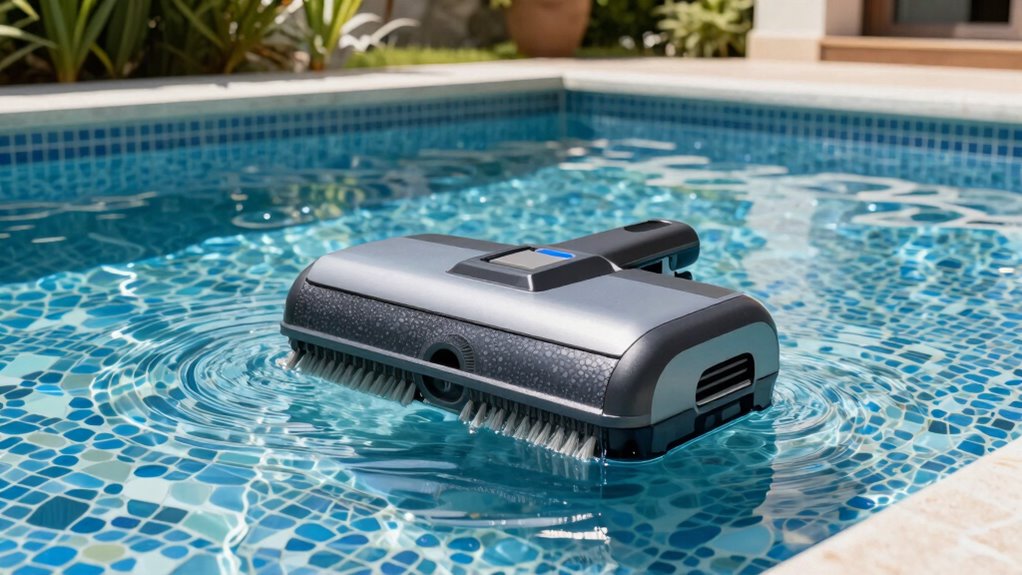
When choosing a robotic pool cleaner, many buyers focus primarily on features and price, but overlooking the type of pool you have can lead to ineffective cleaning and wasted money. The shape, size, and construction of your pool influence how well a cleaner performs, so understanding your pool’s specific needs is essential. For example, in-ground pools often require a different cleaning approach than above-ground pools. If you select a model designed for one type but use it on another, you risk poor coverage or damage. Additionally, understanding pool terminology helps you better assess the features and capabilities of different cleaners to ensure compatibility with your pool. Pool safety is another critical factor often overlooked during the buying process. A cleaner that doesn’t fit well or malfunction can pose hazards, especially in busy or family-oriented pools. You want a device that not only cleans efficiently but also operates safely around swimmers. Features like automatic shutoff or sensors to prevent falling off edges are important considerations. Plus, a cleaner with a reliable filtration system ensures that debris is captured effectively without compromising circulation or pool chemistry. Proper filtration is essential because it prevents clogs, extends the lifespan of the cleaner, and maintains water clarity. Filtration systems vary widely among robotic cleaners, and understanding the different filter types can help you select the most suitable model for your needs. Some models have fine filters capable of trapping tiny particles, while others are better suited for larger debris. If your pool tends to gather leaves or has a lot of dirt, selecting a cleaner with a robust filtration system is critical. Conversely, if your pool mainly collects dust and pollen, a finer filter will serve you better. Remember, a clogged filter can reduce the cleaner’s efficiency and impact pool safety by impairing water flow and circulation. Regular maintenance of the filtration system isn’t just about prolonging the cleaner’s life; it’s also about keeping your pool safe and healthy for swimmers. Additionally, the pool’s features such as steps, ledges, or irregular shapes can influence the effectiveness of certain models, highlighting the importance of choosing a cleaner suited for your specific pool design. Understanding the technology behind different models can help you select a cleaner that performs reliably and efficiently for your pool’s unique layout. Recognizing the different cleaning methods employed by various models can also assist in making a more informed decision to match your pool’s needs. The key is matching the cleaning technology to your pool’s design for maximum results.
robotic pool cleaner for in-ground pools
As an affiliate, we earn on qualifying purchases.
As an affiliate, we earn on qualifying purchases.
Frequently Asked Questions
How Do Pool Types Affect Robotic Cleaner Compatibility?
Your pool type directly impacts robotic cleaner compatibility because different pool surfaces and water chemistry require specific cleaning features. For example, a concrete pool needs a durable brush, while a vinyl pool might need gentler brushes to avoid damage. Water chemistry also affects performance; high pH levels or chemicals can harm the robot. Always match your robotic cleaner to your pool surface and maintain proper water chemistry for peak cleaning.
Are Certain Pool Types More Cost-Effective Long-Term?
Yes, certain pool types are more cost-effective long-term. In concrete pools, you might face higher maintenance costs due to rough surfaces that trap dirt, while vinyl pools typically require less upkeep. The pool material affects water circulation efficiency, impacting energy use and cleaning needs. Proper water circulation reduces debris buildup, saving you money on repairs and robotic cleaner maintenance over time.
What Maintenance Differences Exist Between Pool Types?
You’ll find that concrete pools need frequent surface scrubbing and careful water chemistry management to prevent staining and scaling, while vinyl pools require gentle cleaning and less chemical balancing. Fiberglass pools demand minimal maintenance, thanks to their smooth surface that resists algae. Your pool surface impacts cleaning routines, and water chemistry influences chemical costs and safety. Knowing these differences helps you plan maintenance, saving time and money in the long run.
Do Some Pool Types Require Specialized Robotic Cleaners?
Some pool types do require specialized robotic cleaners, especially if algae growth is common or the chemical balance is tricky to maintain. For example, saltwater pools need cleaners with specific brushes and filtration to handle salt and algae buildup effectively. You should choose a robotic cleaner compatible with your pool type to guarantee it can manage algae growth and maintain proper chemical balance, keeping your pool cleaner and healthier.
How Does Pool Shape Influence Cleaning Efficiency?
Imagine your pool’s shape subtly dictating its cleanliness. You’ll notice that irregular or complex shapes challenge robotic cleaners, affecting their ability to reach every nook and cranny. Pool aesthetics and water circulation patterns play vital roles here. A well-designed shape promotes better circulation, helping the cleaner work efficiently. But if your pool’s form is complex, you might need a more advanced robotic cleaner to keep it sparkling and pristine.
Conclusion
Understanding your pool type is vital because it can influence your robotic cleaner’s performance more than you might realize. Did you know that over 60% of buyers overlook this detail, leading to less effective cleaning? By paying attention to your pool’s specifics, you guarantee your robot works smarter, not harder. So, don’t skip the details—your pool’s cleanliness and your satisfaction depend on it. Trust me, it’s worth the extra step.
Fall Picks
fall essentials
As an affiliate, we earn on qualifying purchases.