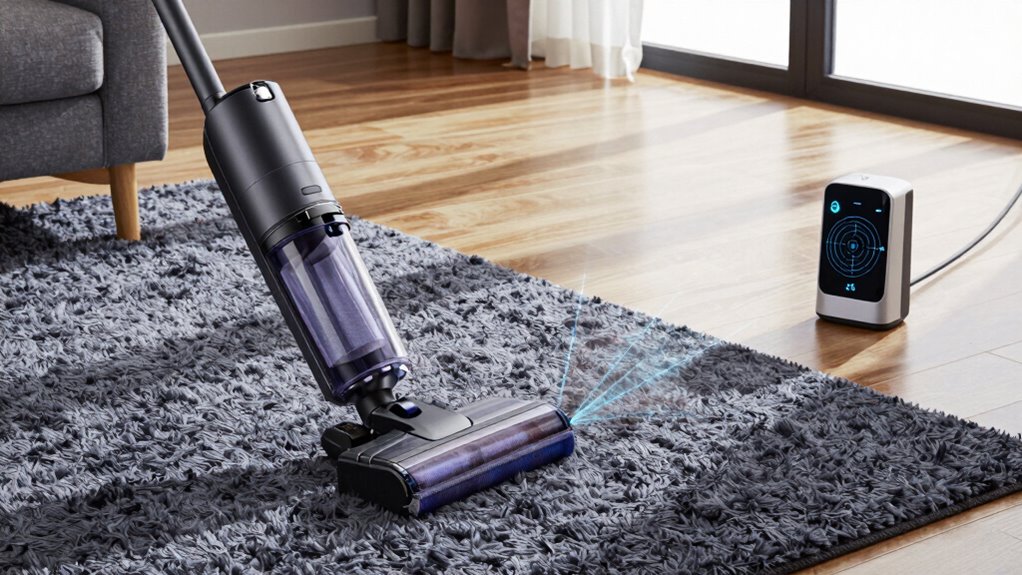

You might think stronger suction is the best way to get a cleaner home, but without good navigation, your robot could miss spots or get stuck. Conversely, a robot with advanced navigation but weak suction may not pick up dirt effectively. Finding a balance between suction power and navigation technology guarantees thorough cleaning without sacrificing efficiency or convenience. Keep exploring to discover how understanding this trade-off can help you choose the perfect robot vacuum for your needs.

Get your next haul delivered free with Prime
- Fast, free delivery on millions of items
- Prime Video, Amazon Music and more included
- Member-only deals all year
Key Takeaways
- Balancing suction power and navigation ensures thorough cleaning while preventing missed spots or incomplete coverage.
- Strong suction can drain batteries faster, reducing the robot’s ability to clean large areas effectively.
- Advanced navigation technology enhances cleaning efficiency by optimizing paths and avoiding obstacles.
- Prioritizing noise levels alongside suction and navigation improves household comfort during operation.
- An optimal balance between performance and user comfort results in a more satisfying and effective cleaning experience.
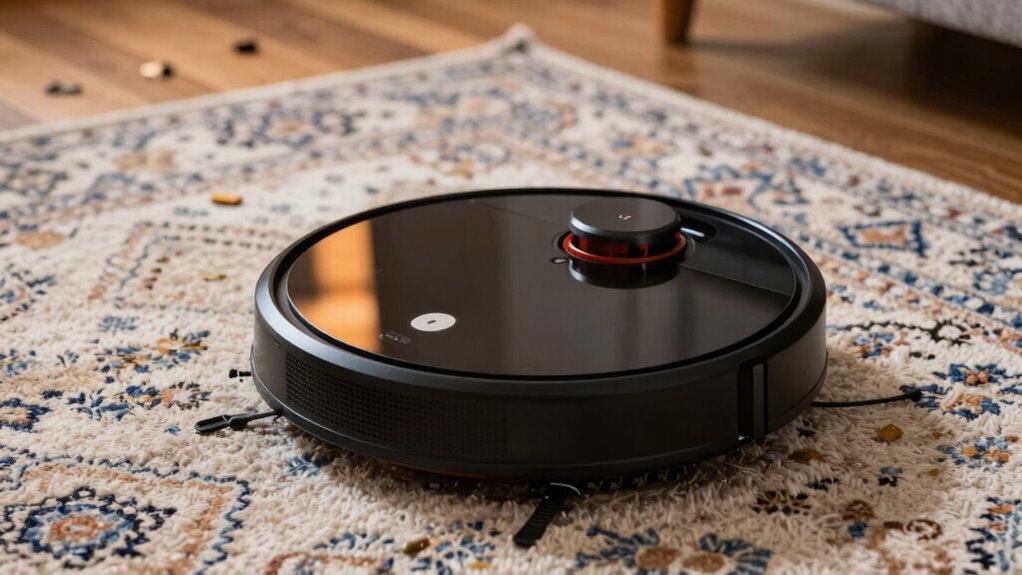
Have you ever wondered why some vacuum robots excel at deep cleaning while others navigate your home more efficiently? The answer often lies in the trade-offs manufacturers make between suction power and navigation capabilities. While it might seem like a straightforward choice—more suction equals better cleaning—there’s a lot more at play behind the scenes. Two critical factors to consider are battery life and noise levels. These elements directly impact how well your robot performs, how long it lasts, and how comfortable it is to live with.
When a robot has powerful suction, it can pick up more dirt, pet hair, and debris in fewer passes. But that added suction often demands more energy, which can drain the battery faster. If your robot’s battery life is limited, it might not complete cleaning cycles before needing a recharge. This could mean running multiple sessions or missing spots altogether, especially in larger spaces. Conversely, some models sacrifice a bit of suction power to extend battery life, allowing them to clean larger areas on a single charge. If you have a big home, opting for a robot with longer battery life might be more practical, even if it means slightly less intense cleaning per pass.
Noise levels are another consideration that intertwines with suction power. High-powered vacuums tend to produce more noise, which can be disruptive, especially if you have a busy household or pets that are easily frightened. If you prefer a quieter operation, you might lean toward a robot with moderate suction but better noise insulation or lower decibel ratings. This choice can make a significant difference in daily use, allowing you to run the robot during work hours or while you’re relaxing without feeling overwhelmed by loud noises. Additionally, navigation technology can significantly influence how well a robot adapts to different floor types and cluttered environments, further affecting overall cleaning efficiency. It’s also important to consider how sensor accuracy impacts a robot’s ability to avoid obstacles and optimize cleaning paths, which can be just as crucial as suction strength.
Understanding these trade-offs and how they relate to performance can help you select a robot that balances effectiveness with comfort. Ultimately, understanding this trade-off helps you choose a robot that aligns with your home’s needs and your lifestyle. Prioritizing battery life, noise levels, suction power, and navigation can ensure you pick a device that cleans effectively without disrupting your daily routine.
Popular right now

Roborock Robot Vacuum and Mop with LiDAR Navigation and 10,000 Pa Suction

Shark Rocket Pet Plus Corded Stick Vacuum, Bordeaux, HV322

Dyson Ball Animal Total Clean Upright Vacuum
As an affiliate, we earn on qualifying purchases.
Frequently Asked Questions
How Do Suction and Navigation Impact Vacuum Maintenance Costs?
Suction and navigation features directly impact your vacuum’s maintenance costs. Higher suction often means more dust capacity, so you can clean longer without emptying the bin, but it might increase filter maintenance needs. Advanced navigation systems may require regular updates or repairs, adding to costs. Balancing strong suction with efficient navigation helps reduce overall maintenance, saving you time and money in the long run.
Can a Vacuum Switch Between Suction and Navigation Modes Automatically?
Imagine your vacuum as a smart traveler, switching routes seamlessly. Yes, many models feature automatic switching between suction and navigation modes, like an autopilot adjusting to terrain. You can also enjoy user customization, setting preferences for specific tasks. This intelligent adaptability helps optimize cleaning, reduces wear, and saves you time. So, your vacuum can effortlessly switch modes, making cleaning smarter and more efficient without you having to lift a finger.
You’ll find that navigation accuracy impacts a vacuum’s lifespan more than suction power does. A precise navigation system reduces collisions and unnecessary wear, preserving components and extending durability. While strong suction power is essential for cleaning, it can strain the motor over time, potentially shortening lifespan if not managed well. Prioritizing navigation accuracy helps maintain overall suction durability and prevents damage, ensuring your vacuum stays reliable longer.
Do Different Floor Types Influence the Suction Vs Navigation Trade-Off?
Like a chameleon adapts to its surroundings, your vacuum’s floor adaptability and surface detection influence the suction vs navigation trade-off. Different floor types, such as carpets or hard floors, require the vacuum to optimize suction power and navigation. A smart surface detection system allows it to adjust settings automatically, ensuring thorough cleaning without compromising navigation. This balance is vital for effective performance across various flooring, making your cleaning routine effortless.
How Does Battery Life Relate to Suction and Navigation Performance?
Battery life directly impacts suction and navigation performance because better battery efficiency allows longer cleaning sessions. When power management is optimized, your vacuum maintains consistent suction strength and smooth navigation without frequent recharging. If the battery drains quickly, both features suffer, leading to incomplete cleaning. To get the best balance, choose a model with strong battery efficiency that supports extended cleaning, ensuring your device performs well across all floor types.
Conclusion
Ultimately, understanding the suction versus navigation trade-off helps you make a smarter choice. Don’t let the perfect be the enemy of the good—know your needs, and you’ll find the right balance. Whether you prioritize deep cleaning power or efficient navigation, making an informed decision keeps you from barking up the wrong tree. Remember, a well-chosen vacuum isn’t just a purchase; it’s an investment in your home’s cleanliness and your peace of mind.