
Imagine opening your phone and seeing a limited-time discount for your favorite store. Suddenly, you feel a rush to act fast. Digital coupons tap into psychological triggers that make them hard to ignore. These cues influence your choices and habits in subtle ways. Want to know what makes them so addictive? Let’s explore the five key psychological factors behind this behavior.

Get your next haul delivered free with Prime
- Fast, free delivery on millions of items
- Prime Video, Amazon Music and more included
- Member-only deals all year
Key Takeaways
- Behavioral reinforcement through instant rewards and habitual deal-seeking strengthens the desire to continuously search for coupons.
- Scarcity cues like limited-time offers and countdowns create urgency, triggering impulsive buying driven by FOMO.
- Emotional responses to scarcity elevate arousal, making deals seem more valuable and reducing rational decision-making.
- Visual cues such as flashing banners and bright colors capture attention, stimulating quick actions and impulsivity.
- The combination of reward-seeking and loss aversion manipulates perception, fostering addictive engagement with digital coupons.
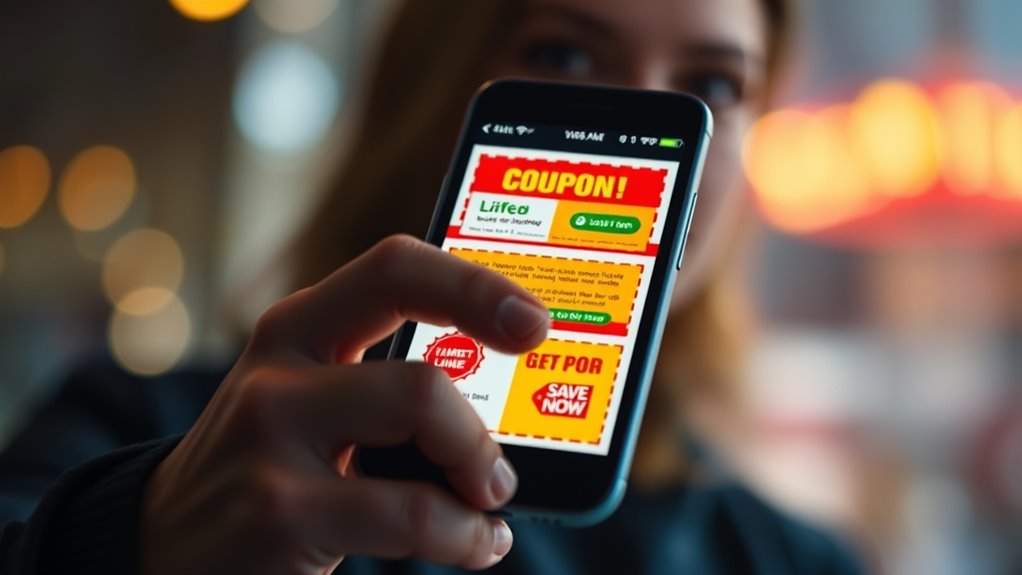
Digital coupons have become a powerful tool for influencing consumer behavior, but their success often hinges on psychological triggers that prompt action. One of the most effective is behavioral reinforcement, which taps into your desire for immediate gratification. When you see a digital coupon offering a discount or freebie, every use reinforces the idea that taking advantage of these offers leads to tangible benefits. Over time, this positive reinforcement encourages you to seek out more coupons, creating a habitual response. The more you redeem, the stronger the association becomes between searching for deals and receiving rewards, making it harder to resist the temptation to click and claim.
Alongside behavioral reinforcement, the scarcity effect plays a fundamental role in making digital coupons addictive. When you encounter a limited-time offer or a limited quantity coupon, your brain perceives it as a rare opportunity that must be seized quickly. This sense of urgency triggers a fear of missing out (FOMO), compelling you to act before the deal disappears. The scarcity effect amplifies your motivation to redeem coupons immediately, even if you weren’t initially planning to make a purchase. It manipulates your perception of value, making the deal seem more exclusive and desirable simply because it’s limited.
Limited-time offers create urgency, triggering FOMO and making deals seem more exclusive and irresistible.
These psychological triggers work together seamlessly. When you see an exclusive coupon with a countdown timer or notice that only a few discounts remain, your brain responds with heightened arousal and a sense of urgency. You’re more likely to overlook other factors like price comparison or product quality because the perceived scarcity makes the deal feel special. This emotional response diminishes rational decision-making, nudging you toward impulsive purchases.
Moreover, digital coupons often leverage behavioral reinforcement by providing instant rewards, such as discount codes sent directly to your device. Each successful redemption reinforces the habit, making it more likely that you’ll keep hunting for such offers. The immediacy of digital coupons, combined with scarcity cues, creates a cycle where your desire to avoid missing out ensures continued engagement. Additionally, visual cues like flashing banners or bright colors further stimulate your attention and impulsivity, increasing the likelihood of quick action. Over time, these triggers can make digital coupons not just a means of saving money but an addictive experience that constantly draws you back for more.
In essence, the strategic use of behavioral reinforcement and scarcity effect transforms digital coupons into powerful psychological tools. They tap into your innate tendencies—seeking rewards and fearing loss—to keep you engaged, making it difficult to resist the allure of that next deal.
Conclusion
So, next time you find yourself obsessively chasing those digital coupons, remember—you’re not just saving money, you’re falling under an unstoppable hypnotic spell. These triggers are designed to hijack your brain, making it nearly impossible to resist. Before you know it, you’ll be hooked, craving that instant hit of gratification and fearing you’ll miss out on the next big deal. Beware—these coupons aren’t just discounts; they’re a gateway to irresistible addiction!
Halloween Picks
halloween
As an affiliate, we earn on qualifying purchases.