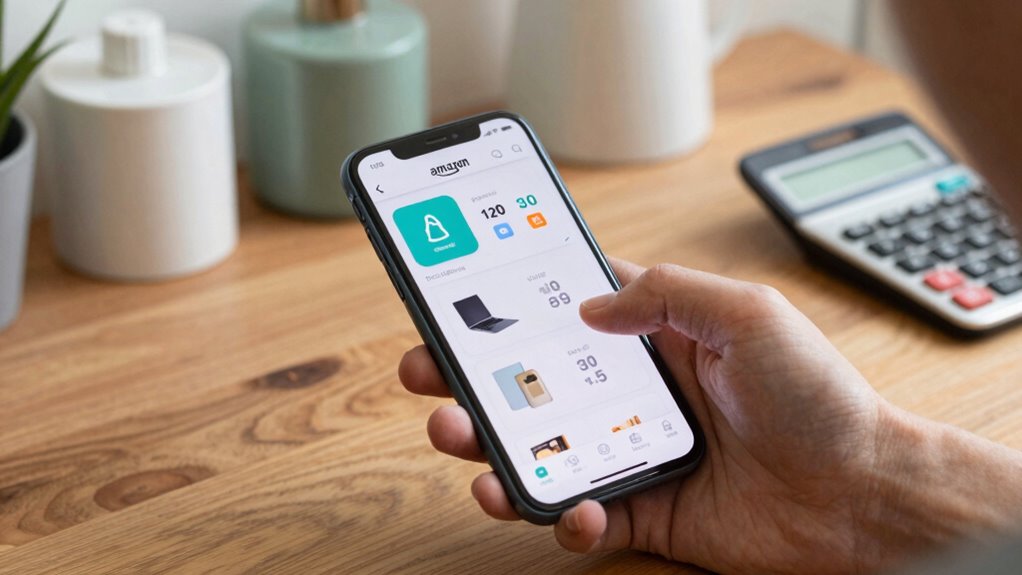

To compare price per unit on Amazon without a spreadsheet, look for the unit price listed under the main price, or divide the total price by the number of units yourself. Use quick mental math to identify the most economical option. Pay attention to reviews and quality alongside the price. Keep these simple steps in mind, and you’ll find it easier to make smart choices—there’s more to discover if you keep exploring.

Get your next haul delivered free with Prime
- Fast, free delivery on millions of items
- Prime Video, Amazon Music and more included
- Member-only deals all year
Key Takeaways
- Check if Amazon displays the price per unit directly beneath the product price for quick comparison.
- If not visible, divide the total price by the number of units to calculate the unit price mentally.
- Use visual cues, like larger packages, to identify potential bulk savings without detailed calculations.
- Compare reviews and ratings to ensure product quality aligns with the lower price per unit.
- Focus on key product specifications and overall value, not just the cost per unit, for better purchasing decisions.
Ever wonder if you’re really getting the best deal on Amazon? When you’re shopping online, it’s easy to fall into the trap of focusing solely on the total price without considering how much you’re actually paying per unit. That’s where comparing the price per unit becomes essential. Instead of relying on complicated spreadsheets or calculations, you can use simple strategies to make smart choices. One of the main benefits of comparing price per unit is spotting bulk savings. When products are sold in larger quantities, the cost per item often drops, giving you more value for your money. However, you should also keep an eye on product quality—because a lower price doesn’t always mean a better deal if the product isn’t up to your standards.
To start, look closely at the product listing. Amazon usually displays the price per unit directly beneath the main price, especially with items sold in different package sizes. If it’s not visible, don’t hesitate to do a quick mental calculation: divide the total price by the number of units in the package. This simple step can reveal whether the larger or smaller package offers the most savings. When comparing options, consider both the bulk savings and the quality of the product. Sometimes, buying in bulk can be tempting because of the lower unit cost, but if the product is of inferior quality or doesn’t meet your expectations, it might not be worth it.
Another useful tip is to check reviews and ratings. High-quality products tend to have more positive feedback, which can help you avoid wasting money on subpar items. If a product with a lower price per unit has numerous complaints about durability or effectiveness, it’s probably not a good deal in the long run. Also, consider the brand reputation—sometimes well-known brands justify a higher price because of consistent product quality. Keeping this in mind helps you weigh the benefits of bulk savings against potential risks of lower quality. Additionally, understanding the contrast ratio and how it impacts image quality can be useful if you are comparing products for different needs. Recognizing product specifications can also help you identify features that are essential for your intended use.
Furthermore, knowing about natural pools and eco-friendly practices can sometimes influence your purchasing decisions if sustainability is a priority. When evaluating options, it’s helpful to understand how price per unit directly affects your budget over time. Comparing the price per unit on Amazon doesn’t require a spreadsheet — just your eyes, some quick calculations, and a bit of judgment. This approach empowers you to make smarter, more informed decisions, saving you money and ensuring you get quality products that meet your expectations.
Amazon price per unit calculator
As an affiliate, we earn on qualifying purchases.
As an affiliate, we earn on qualifying purchases.
Frequently Asked Questions
Can I Compare Price per Unit on the Amazon App?
Yes, you can compare price per unit on the Amazon app. When viewing a product, check the product details or description for unit pricing, which helps you assess product quality and value. Also, consider the seller’s reputation and reviews to guarantee you’re buying from a trusted source. This way, you make informed decisions based on both price per unit and seller reliability, saving money without needing a spreadsheet.
Is Price per Unit the Same Across Different Sellers?
Did you know that prices can vary by up to 30% between sellers? Price per unit isn’t always the same across different sellers because they use various pricing strategies and aim to appeal to different customer segments. Your best bet is to check seller reputation and compare the price per unit directly. This way, you guarantee you’re getting the best deal without sacrificing quality or trustworthiness.
How Do Discounts Affect Price per Unit Calculations?
Discounts lower the total price, which affects your unit pricing calculation. To accurately compare, subtract the discount amount from the original price, then divide by the number of units to find the discounted unit price. This discount calculation guarantees you’re comparing the true cost per unit across different sellers, helping you identify the best deal. Always consider discounts to get an accurate picture of the actual unit pricing.
Are There Tools to Automatically Compare Prices on Amazon?
You can use tools that automatically compare prices on Amazon by leveraging pricing algorithms and Amazon metrics. These tools analyze product prices, discounts, and seller data in real-time, saving you from manual calculations. Apps like Keepa or CamelCamelCamel track price history, while browser extensions like Honey or Priceblink instantly reveal the best deals. These tools make it easy to spot the lowest price, helping you make smarter purchase decisions without spreadsheets.
Does Size Variation Impact the Price per Unit Comparison?
Size variation and packaging differences definitely impact the price per unit comparison. When you see larger sizes, the price per unit often drops, giving you a better deal, but only if the packaging is comparable. Always check the price per unit for each size and packaging option, as smaller packages might seem cheaper but could cost more per ounce or piece overall. This way, you make smarter, cost-effective choices.
Conclusion
Now that you know how to compare price per unit on Amazon without a spreadsheet, you’re equipped to make smarter shopping choices. It’s like having a secret weapon in your pocket, transforming a cluttered list into a clear, confident decision. Instead of feeling overwhelmed by numbers, you become a savvy shopper, spotting the best deals effortlessly. So next time, don’t just look at the price—look at the value behind it, and shop smarter every time.
Halloween Picks
halloween
As an affiliate, we earn on qualifying purchases.