To spot fake reviews on Amazon, look for patterns like a sudden surge of reviews or overwhelming positivity without details. Check reviewer profiles for limited activity, repetitive reviews, or lack of verified purchases. Be wary of overly generic language, promotional tone, or reviews posted in rapid succession. Authentic reviews usually share specific experiences and balanced pros and cons. Want to uncover more tips? Keep exploring to learn how to confidently identify genuine reviews and make smarter purchases.

Get your next haul delivered free — and shop member deals
- Fast, free delivery on millions of items
- Access to Prime Big Deal Days deals on October 6–7
- Prime Video, Amazon Music and more included
Key Takeaways
- Look for review bursts and high volumes in a short time, indicating potential manipulation.
- Check reviewer profiles for limited activity or reviews only for the seller or product.
- Be wary of overly generic, excessively positive reviews lacking specific details.
- Analyze the timing of reviews; sudden spikes suggest possible fake review campaigns.
- Read a mix of reviews to identify genuine experiences versus suspiciously uniform or promotional content.
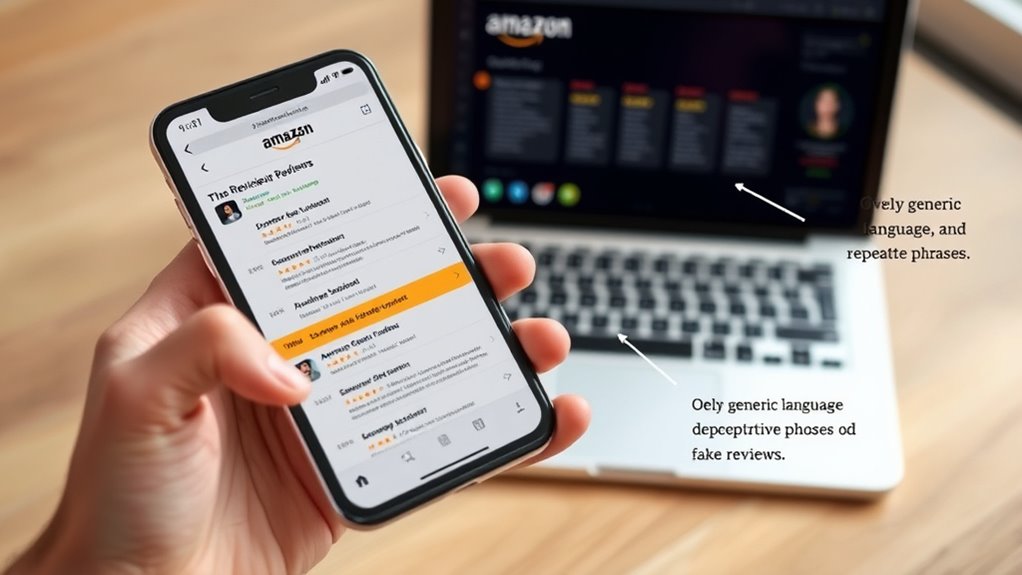
Ever wonder how to tell if Amazon reviews are real or fake? It’s a common concern, especially with the rise of review manipulation and seller tactics designed to boost a product’s reputation artificially. Fake reviews can be hard to spot at first glance, but paying attention to certain signs can help you make smarter, more informed decisions. Many sellers employ review manipulation strategies to inflate their products’ ratings, often using fake accounts or incentivized reviews. Recognizing these tactics is key to avoiding misleading information.
Learn how to identify fake Amazon reviews and protect your shopping decisions.
One of the first things to watch for is the overall review pattern. If a product has a high number of reviews packed into a short period, it could be a red flag. Fake reviews are often posted in bursts to quickly boost a product’s star rating. Additionally, if many reviews sound overly generic or excessively positive without specifics, it might suggest review manipulation. Fake reviews tend to use vague language, avoid details about the product, or are overly enthusiastic without backing up claims. Conversely, genuine reviews usually mention specific features, personal experiences, and sometimes even minor flaws.
Check the reviewer profiles as well. Fake review accounts often have limited activity, with few reviews across multiple products, or they may only review products from the same seller. These profiles are sometimes created solely to post reviews, making them easy to spot once you look closely. Amazon’s verified purchase badge is another helpful indicator. While not foolproof, reviews marked as verified purchase are more likely to be authentic, as they come from customers who actually bought the product.
Pay attention to the language used in reviews. Fake reviews often contain repetitive phrases or promotional language that sounds unnatural. They might also include a lot of exclamation points or hyperbolic statements that seem exaggerated. Authentic reviews tend to be more balanced, mentioning both pros and cons, and reflecting a genuine user experience. If many reviews follow a similar wording pattern or seem suspiciously uniform, it’s worth questioning their legitimacy.
Furthermore, reviewing the review timing can reveal patterns of coordinated posting that are common with fake reviews. If a large chunk of reviews appears within a very narrow timeframe, it could be manipulated to skew the product’s rating artificially.
Lastly, look at the product’s overall rating and review count. If a product has an unusually high rating with very few critical reviews, it could be a sign of seller tactics aimed at creating a perfect facade. The best approach is to read through a mix of positive and negative reviews to get a clearer picture. Remember, not every glowing review is fake, but a combination of these warning signs can help you spot potential deception. By staying vigilant and analyzing reviews carefully, you can protect yourself from falling for fake reviews and make more informed purchases on Amazon.
Frequently Asked Questions
Can Verified Purchase Reviews Be Fake?
Yes, verified purchase reviews can be fake. Some sellers manipulate product authenticity and pay for fake reviews to boost their reputation. Always check the seller’s reputation and look for patterns like overly positive or generic comments. Be cautious, even with verified purchase labels, as unscrupulous sellers sometimes fake those reviews too. Trust your instincts and consider multiple reviews to make an informed decision about a product.
Do Review Badges Guarantee Authenticity?
Do review badges guarantee authenticity? Not entirely. While a review badge indicates a verified purchase, it doesn’t eliminate review badge limitations, like fake reviews slipping through or biased opinions. You should maintain consumer skepticism and look for detailed, balanced reviews rather than relying solely on badges. By doing so, you protect yourself from false claims and make more informed purchase decisions, even when badges seem to suggest trustworthiness.
How Reliable Are Amazon’s Review Removal Policies?
Amazon’s review removal policies are reasonably reliable, but they aren’t foolproof. The platform emphasizes review policy transparency, aiming to tackle fake reviews effectively. However, some seller review suppression still occurs, which can hide genuine feedback. You should stay cautious, knowing that while Amazon works to keep reviews trustworthy, occasional gaps mean you shouldn’t rely solely on reviews when making decisions. Always cross-check reviews across different sources.
Can Professional Reviewers Influence Ratings?
You bet professional reviewers can influence ratings — their opinions can sway thousands of buyers like a tidal wave. Influencer endorsements and paid promotions often blur the line between genuine feedback and advertising, making it tricky to trust reviews blindly. Always check for transparency about sponsorships, and look for detailed, balanced critiques. Remember, a professional review isn’t always honest; it’s a powerful tool that can shape your perception of a product.
Are There Tools to Automatically Detect Fake Reviews?
Yes, there are fake review detection tools that can help you with review analysis automatically. These tools analyze patterns, review timing, and language to identify suspicious reviews. By using fake review detection tools, you can save time and make more informed decisions. They give you a clearer picture of genuine feedback, so you avoid misleading reviews and trust authentic product ratings.
Conclusion
By learning to spot fake reviews, you become a savvy shopper steering a crowded market. Think of reviews like a garden—you’ll find some flowers and some weeds. Once you know what to look for, you can weed out the fake ones and enjoy a bountiful harvest of honest opinions. With a little practice, you’ll confidently make better choices, just like a gardener tending to a healthy, vibrant garden instead of one overrun with weeds.
Fall Picks
fall essentials
As an affiliate, we earn on qualifying purchases.